What Happens When a Brand Thinks Like a Product?
A brand is no longer experienced through a logo alone. People interact with brands through websites, apps, products, interfaces, content, and countless digital touchpoints. When a brand starts thinking like a product, every interaction becomes intentional, useful, and connected.
By Rixlab
A Brand Is No Longer Just a Visual Identity
For years, branding was often associated with logos, colors, typography, and visual guidelines.
Those elements still matter, but modern brands are experienced through much more.
Customers interact with a brand through websites, mobile apps, dashboards, checkout flows, onboarding screens, social content, and digital products.
Every one of these interactions influences how the brand is perceived.
That changes the question from “What does the brand look like?” to “What does the brand feel like when people use it?”
Product Thinking Changes the Question
Product thinking starts with a simple principle: understand the problem before designing the solution.
Instead of beginning with visual preferences, it begins with users, goals, behaviors, constraints, and measurable outcomes.
A brand that adopts this mindset becomes more intentional about every customer interaction.
It starts asking whether an experience is understandable, useful, accessible, scalable, and aligned with the business.
Rixlab's product design methodology reflects this approach through discovery, research, problem framing, product strategy, UX architecture, interface design, validation, and developer handoff. (rixlab.agency)
The Brand Becomes a System
Product thinking naturally pushes branding beyond individual assets.
Instead of designing isolated pages or graphics, teams begin building reusable systems.
Typography becomes a system.
Color becomes a system.
Components become a system.
Interaction patterns become a system.
Content hierarchy becomes a system.
Design systems help ensure that as a company grows, the experience can grow with it without losing consistency. Rixlab specifically positions scalable design systems as part of its UI/UX and website work. (rixlab.agency)
Every Interaction Becomes a Brand Moment
A user does not separate “branding” from “UX” while using a product.
They simply experience the whole thing.
A clear onboarding flow communicates confidence.
A thoughtful empty state communicates care.
A fast website communicates efficiency.
A confusing checkout communicates friction.
A consistent interface communicates reliability.
In this way, product decisions become brand decisions.
Design for Behavior, Not Just Attention
Traditional visual branding often focuses on recognition.
Product thinking adds another layer: behavior.
What should the user understand?
What should they do next?
What might stop them?
What information do they need?
What happens when something goes wrong?
These questions turn design from decoration into a practical tool for guiding people through an experience.
A Product Can Carry a Brand's Personality
Personality does not have to live only in a logo or advertising campaign.
It can appear in micro-interactions, motion, copy, navigation, visual hierarchy, and interface behavior.
A calm brand can create calm interactions.
A bold brand can use confident visual and motion language.
A premium brand can communicate precision through spacing, typography, transitions, and attention to detail.
This is where brand identity and product design begin to operate as one experience.
Product Thinking Also Makes Brands More Adaptable
Markets change.
Products evolve.
New features appear.
New audiences arrive.
New platforms become important.
A rigid identity can struggle to keep up with these changes.
A system-based brand, however, can adapt while maintaining its core character.
This is one reason scalable design systems matter: they create consistency without preventing evolution.
The Best Brand Experiences Feel Natural
When branding and product thinking work together, users do not necessarily notice every design decision.
They simply understand what to do.
They know where to go.
They trust what they see.
They recognize the brand without needing to see the logo.
That is a powerful outcome because the brand becomes part of the experience rather than something placed on top of it.
When a Brand Starts Thinking Like a Product
It stops asking only how it should look.
It starts asking how it should work.
It stops treating every touchpoint as a separate deliverable.
It starts building connected experiences.
It stops designing only for today's launch.
It starts creating systems that can evolve tomorrow.
Ultimately, a brand that thinks like a product does not simply become more attractive—it becomes more useful, coherent, and memorable.
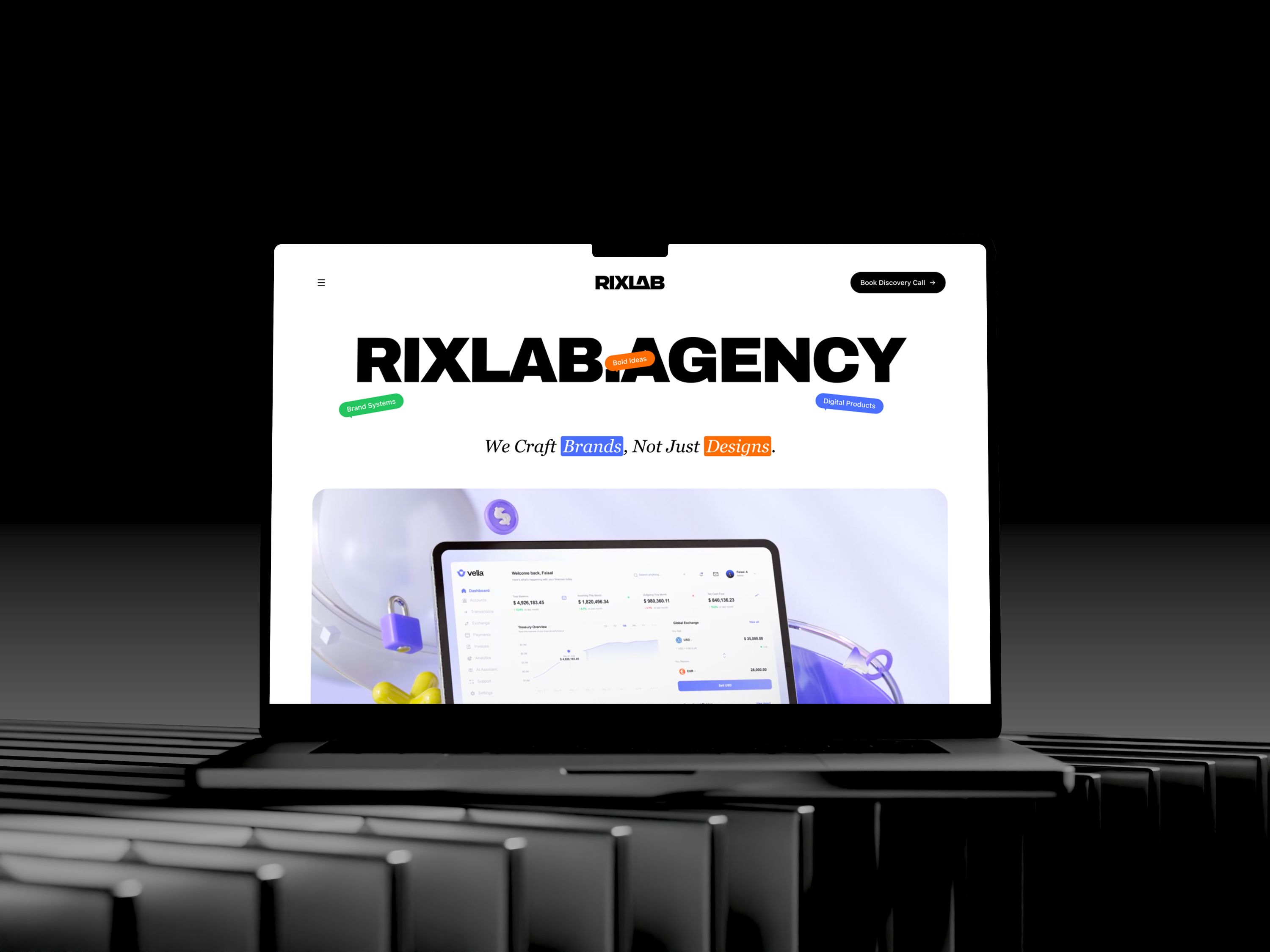
Rixlab is a strategic branding and digital product agency helping ambitious businesses build memorable brands, exceptional websites, and meaningful digital experiences. We combine thoughtful strategy with refined design to create work that delivers long-term value.
Let's make your next move.
Share what you are building. We will reply within one working day with a clear read on fit, scope, and timing.